Arhive

Shaping the Next Phase: MTM & FTS Partner Workshop

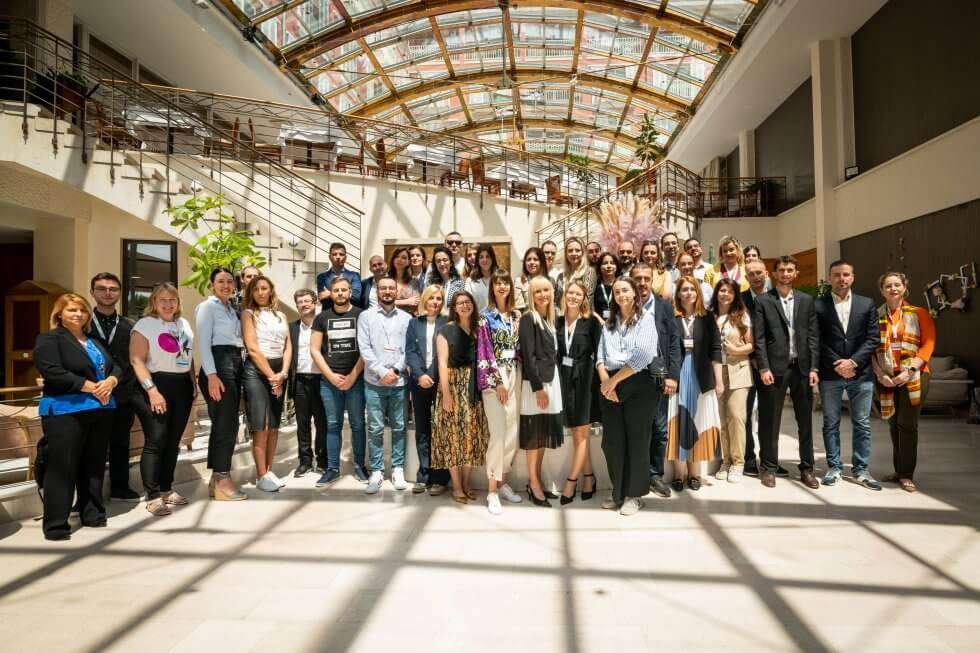
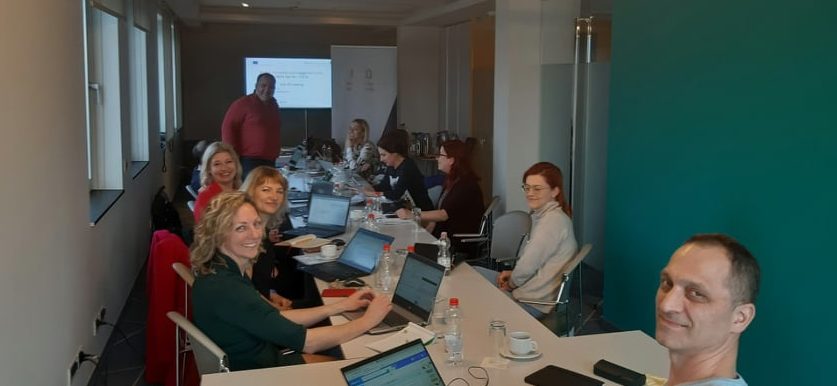
On March 31st and April 1st, 2026, representatives from Metamorphosis Foundation and TechSoup’s Digital Activism Program team came together for an intensive workshop for planning and reflection on the activities under the Regional Support Mechanism EECA.

The discussions began with an overview of the project timeline, needs assessment, and results from the call for grant proposals, offering a shared understanding of progress and key achievements so far. Building on this, partners explored future directions, focusing on strengthening networks, exchange opportunities, and capacity-building efforts.

The workshop also served as a platform for deeper collaboration, encouraging open dialogue and knowledge exchange. Special attention was given to advocacy efforts, highlighting the importance of connecting research, storytelling, and policy engagement.

Looking ahead, the workshop laid a strong foundation for the next phase of implementation, with a clear focus on amplifying impact and ensuring sustainability. The insights and energy generated during these sessions will continue to guide joint efforts, reinforcing a shared commitment to more resilient, inclusive, and effective work in the digital democracy field.

The project Regional Support Mechanism EECA is part of CIVICUS’ global Digital Democracy Initiative (DDI) that aims to build a sustainable and inclusive ecosystem for digital democracy in Eastern Europe and Central Asia, especially in conditions of narrowing civic space, disinformation, and increased digital risks.

Conference held to launch the co-creation process of the National Action Plan for the Open Government Partnership 2026–2028

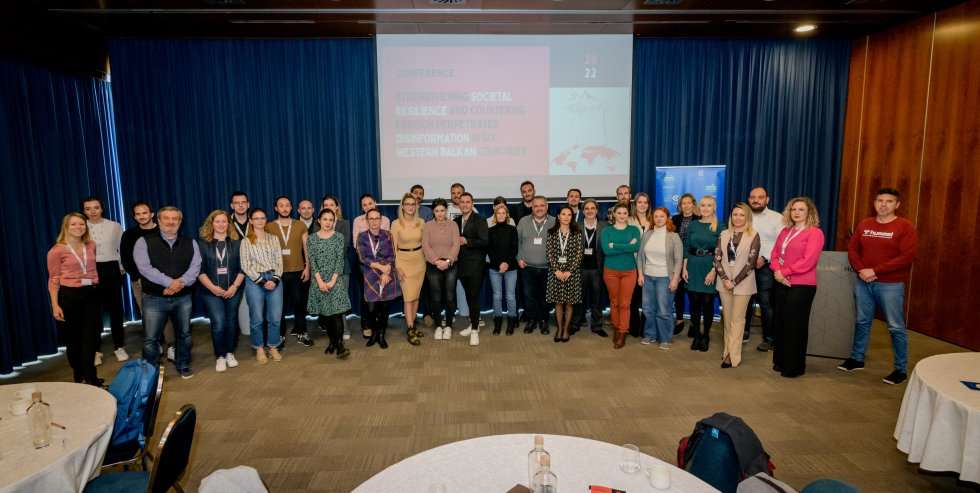
Today, organized by the Ministry of Public Administration, in cooperation with the Metamorphosis Foundation and the Center for Civil Communications, a conference was held to launch the process of co-creation of the National Action Plan for Open Government Partnership 2026 – 2028. The conference was attended by the Program Director of the Metamorphosis Foundation, Dance Danilovska-Bajdevska, the Minister of Public Administration, Goran Minchev, the Secretary General of the Assembly, Marina Dimovska, the National Coordinator for Open Government Partnership, Gordana Gapikj Dimitrovska, and representatives of several institutions and civil society organizations.

“The Open Government Partnership is not just a process, it is a model of work that shows that when institutions and civil society collaborate, the results are better, more concrete and more beneficial for citizens. I can say that, over the years, this process has proven to be one of the rare mechanisms in which there is a truly equal partnership where civil society and institutions sit at the same table, with an equal number of representatives, with an equal voice and with shared responsibility for achieving results,” said Danilovska-Bajdevska.


She pointed out that the partnership approach delivers tangible results, including increased proactive transparency of institutions, which contributed to increasing the publication of data and information of public interest, establishing standards for open data, improving access to public information and developing digital services.
According to the Minister of Public Administration, Goran Minchev, the Open Government Partnership is an important instrument for promoting transparency, accountability, and public participation in policymaking, and what makes it particularly significant is the fact that it is not an initiative of a single institution, but a joint commitment that unites the executive branch, parliament, judiciary and civil society.
For Minchev, the success of the process depends on the institutions and their commitment to implementing the commitments undertaken, but the positive pressure from civil society organizations represents an added value, which contributes to greater ambition, transparency, and accountability in the implementation of reforms.

Gordana Gapikj Dimitrovska, the National Coordinator for  the Open Government Partnership (OGP), emphasized that the co-creation of the new National Action Plan provides an opportunity to create new commitments and priorities.

“The Open Government Partnership is more than an initiative, it is a platform where institutions and civil society jointly define reforms, and the added value is that they work together on their implementation. We have worked on advancing the already established reforms, we have institutions that have been working from the beginning to change the culture of work and to make more information available to the public. We have worked on open data, increasing the consultation process, access to justice, transparency at the local level, and we have examples that the process is making changes in our society,” said Gapikj Dimitrovska.

German Filkov from the Center for Civil Communications emphasized the institutions that have always acted as partners in the process and pointed out the concrete results of that cooperation.

“The significance of the Open Government Partnership is seen through the government website data.gov.mk, which is a commitment from an action plan. The website ener.gov.mk, which was just launched, had a commitment to optimize it and make it a consultation tool for adopting regulations, which exists today. The Council for Cooperation of the Government with Civil Society is also one of the commitments, the Government Strategy is developed with the participation of the civil society sector, and data on all civil society organizations is publicly available in the Central Register. Initiatives from Action Plans include the whistleblower law, the integrity system of institutions, the register of elected and appointed officials, the electronic submission of asset declarations, and others,” Filkov pointed out.

He emphasized that, thanks to this process, information on all companies in the Central Registry is now publicly available, all health programs and their implementation have been publicly announced, and, as one of the most important changes resulting from the partnership, he highlighted the Open Treasury and the public disclosure of the names of the real owners who conclude contracts through the Public Procurement Bureau.

Fact-Checking Day 2026: Wars and Geopolitical Instability – a Challenge for Fact-Checkers Around the Worl

Fact-checkers and all those advocating to preserve the integrity of information in the public sphere are marking April 2 today – the International Fact-Checking Day (#FactCheckingDay), which this year is overshadowed by wars that, as is well known, are no friends of facts and truth.

The first International Fact-Checking Day was launched by the International Fact-Checking Network (IFCN) in 2016, with the aim of celebrating and highlighting the work of fact-checkers around the world, and it has been observed every year since. The International Fact-Checking Network began with just a dozen member organizations, and today it includes more than 180 organizations worldwide.

In North Macedonia, a full and certified member of this network since 2019 is the Metamorphosis Foundation (metamorphosis.org.mk) together with the fact-checking portal Truthmeter.mk (truthmeter.mk). Since 2023, Metamorphosis and Truthmeter.mk have also been certified members of the European Fact-Checking Standards Network (EFCSN), based in Brussels, Belgium, and other Metamorphosis outlets are actively involved in fact-checking as well, including the Meta.mk News Agency (meta.mk) and the Albanian-language news portal Portalb.mk (portalb.mk).

Over the past year, Metamorphosis outlets have produced nearly 1,000 fact-checks, including debunks of spin and manipulations expressed by participants in the creation of public policies, as well as assessments of the fulfillment of political parties’ pre-election promises.

Wars, which by their very nature blur, conceal, and distort truth and facts, have in recent times, as well as at present, been one of the main topics in the media. The war in Ukraine, following Russia’s aggression against its peace-loving neighbor, has now lasted for more than four years with no hope of a ceasefire. After last year’s airstrike on Iran, when nuclear facilities and research centers in the country were bombed during the summer by Israel and the United States, we are now witnessing an expanded replay, one that carries a serious risk of turning into a full-scale military invasion and has already spread across the entire region. The speed at which this conflict has expanded matches the speed at which

disinformation stemming from it spreads. Simply put, the more countries and people are directly or indirectly affected by the military conflict, the more disinformation, manipulation, and half-truths begin to circulate in the public sphere.

Unlike at the very beginning of the conflict, when there was noticeable misuse of visual materials such as photos and video clips from earlier conflicts, falsely presented as current in order to portray the other side as criminal, we are now witnessing entire disinformation narratives being pushed through constant and repetitive false claims. The aim is to reframe unfavorable news and information in the media and present events in a light benefiting those promoting such narratives to the public. This is often done by highly positioned state officials or influential circles, who are regularly cited by global media and whose disinformation efforts reach the wider public far more easily than fact-checkers do.

When it comes to disinformation and harmful Foreign Interference, Manipulation, and Information (FIMI) operations originating from the Kremlin, which in recent years have been a major challenge for fact-checkers, there has recently been a noticeable decline in intensity. However, existing disinformation narratives targeting Ukraine, the West and its institutions such as the EU and NATO, as well as the glorification of Russia and Putin, still persists. What should be kept in mind, though, is that despite this reduced intensity, due in part to the long-term strain on Russia’s state finances caused by the need to boost military spending, the Kremlin continues to use every opportunity it can to inflict harm on NATO and EU member states, including in the sphere of disinformation.

Besides wars, another serious challenge for fact-checkers is the increased use of artificial intelligence to spread disinformation. Unlike the past two to three years, when AI-generated disinformation mainly came from abroad and was therefore easier to uncover, as we predicted, the use of AI in producing disinformation is increasingly domestic, or local. An explosion of such locally produced AI disinformation is expected in 2027-28. In any case, an increasing number of photos, often used primarily to drive clicks or sell products, such as medicines, are coming from domestic users, and this trend is certain to continue.

Online scams, particularly those spreading through social media, have recently experienced a kind of “mini-renaissance” with both the variety and frequency of scams on the rise. Most of these scams are familiar and have been seen before, but what is increasing is their intensity and number. It has now become difficult to avoid fraudulent content when using social media. Even basic clickbait scams, designed solely to get users to click on links that generate revenue, are making a comeback, even though until a year or two ago they were largely overshadowed by crypto scams and the sale of fake medicines. These “sellers” were among the first to use artificial intelligence, as well as international scams run by global scam “factories” based in the Far East.

Political disinformation, which has been a primary focus of Truthmeter.mk and other Metamorphosis Foundation outlets since 2011, remains highly relevant. Although the situation is far and incomparably better compared to the political crisis of the last decade (2011-2017), a number of problems related to disinformation among political actors persist. Pre-election promises by political parties regularly lack deadlines for fulfillment, and many unfulfilled promises are simply carried over into new party programs with each election cycle. As for party press releases, it is not uncommon for disinformation to appear in them. In politicians’ statements, the most common issues are manipulations in which the truth is stretched, omitted, concealed, obscured, misused, or distorted.

This year, International Fact-Checking Day is being observed under the slogan “We Stand for Facts!” (#WeStandForFacts), and the International Fact-Checking Network will present its latest annual report on the state of fact-checking, the State of the Fact-Checkers Report.

#FactsMatter #FactCheckingDay

Call for Proposals: Selection of Independent External Auditor

The Metamorphosis Foundation announces a call for proposals for the selection of an independent external auditor to conduct audits of the financial statements of two projects funded by CIVICUS, as well as the statutory audit of the organization’s annual financial statements for 2025.

The assignment includes financial, compliance, and performance audits in accordance with International Standards on Auditing (ISA) and ISSAI standards, as well as the preparation of audit reports and a management letter.

Eligible applicants are legally registered audit firms with relevant experience in auditing donor-funded projects.

Deadline for submission: April 6, 2026

Submission email: marijap@metamorphosis.org.mk

Additional information on the projects, budgets, and final account will be provided to all interested applicants upon request via email at marijap@metamorphosis.org.mk

The Terms of Reference (ToR) and the financial offer template are provided as part of the call documentation.

Further details on the scope of work and application requirements are available in the full call for proposals.

Open Government Partnership – Conference to Launch the Co-Creation Process for the 2026–2028 National Action Plan

The Ministry of Public Administration, in cooperation with the Metamorphosis Foundation and the Center for Civil Communications, is organizing a Conference to launch the process of co-creation of the National Action Plan for Open Government Partnership 2026 – 2028, which will be held on April 2 (Thursday) 2026 at the Club of State Administrative Bodies starting at 11:00 a.m.

The conference will mark the beginning of an inclusive process to define priorities and commitments under the new National Action Plan for the Open Government Partnership, through the joint participation of institutions, civil society organizations, and relevant stakeholders. The event will open a discussion on the strategic vision and institutional commitment to the Open Government Partnership, as well as on the concrete benefits of participation, including transparency, accountability, inclusiveness, and open institutions.

The agenda includes presentations and panel discussions with representatives from institutions and civil society, as well as interactive work in thematic groups to co-create priority areas such as anti-corruption, civic space, digital governance, the environment, and open institutions.

Part of the support for organizing the conference is provided through the project “OpenGov Together: Supporting Implementation and Designing the Future” funded by the Open Government Partnership Secretariat.

DDI Hackathon – From Ideas to Action: How Digital Tools Are Strengthening Civic Engagement and Resilience

Across diverse countries and civic realities, one pattern consistently emerges: people want to engage, respond, and contribute, but too often, they lack the structure, tools, or confidence to do so effectively.

The five initiatives developed as part of the DDI Hackathon highlighted here demonstrate a powerful shift. By designing practical, user-centered digital solutions, they are not only addressing immediate gaps, but fundamentally changing how individuals and organizations participate in civic life-making action more accessible, coordinated, and impactful.

Unlocking Civic Potential: From Passive Interest to Active Participation

A central barrier to civic engagement is not apathy, but uncertainty. Many young people, volunteers, and community actors have ideas and motivation, yet struggle with where to begin or how to translate intention into action.

Solutions like Path2Action and ActiVibe directly tackle this challenge by providing structured, step-by-step guidance and curated pathways for engagement. By simplifying planning processes and offering practical tools, these platforms reduce the intimidation of getting started.

The impact is tangible. Users are no longer limited to supporting roles, they become organizers, contributors, and initiators of civic activities. In testing phases, participants not only used the platforms but began independently contributing content, exploring new initiatives, and engaging more proactively.

Crucially, this transformation is happening even in restrictive environments. ActiVibe demonstrates that when young people are given safe, thoughtfully designed digital spaces, they continue to engage in meaningful, non-violent civic action despite legal and political constraints. The result is not only increased participation, but sustained engagement, creativity, and resilience.

Simplifying Complexity: Making Critical Processes Usable for Everyone

In parallel, several initiatives address another key barrier: complexity.

Responding to misinformation or verifying online content often requires navigating fragmented tools, multiple languages, and unclear sources. This creates delays and discourages action at the very moment when speed and accuracy matter most.

CrossCheck and Disbunk transform this experience. By integrating workflows, bringing together intake, analysis, verification, and coordination into single, intuitive platforms, they dramatically reduce the effort required to act responsibly. What once required scattered searches, manual tracking, and advanced skills is now accessible within a unified system. Users can verify claims, organize evidence, and coordinate responses more efficiently and with greater confidence.

This has a broader impact beyond efficiency. By lowering the barrier to entry, these tools expand who can participate in countering misinformation. Students, journalists, and civil society actors alike are better equipped to engage critically with information and contribute to a healthier digital ecosystem.

From Reaction to Preparedness: Strengthening Organizational Capacity

While individual empowerment is a key outcome, these innovations also significantly strengthen organizational readiness.

The development of the Maira Crisis Co-Pilot reflects a shift from fragmented expertise to structured, real-time support. Organizations facing coordinated online attacks, reputational risks, or disinformation campaigns often lack immediate, actionable guidance in high-pressure situations.

By translating crisis-response knowledge into an AI-assisted, workflow-based tool, the project provides organizations with the ability to navigate uncertainty more effectively. Even before full deployment, the creation of a functional MVP represents a critical change: moving from conceptual understanding to operational readiness.

Similarly, Disbunk enhances how teams collaborate in responding to disinformation. By centralizing incident tracking, evidence management, and communication, it enables organizations to move beyond reactive responses toward coordinated, strategic action.

Together, these tools strengthen not only individual capacity, but the broader ecosystem of actors working to protect democratic processes.

Designing for Impact: What Makes These Solutions Work

Despite their different contexts and focus areas, all five initiatives share a common approach: they prioritize usability, clarity, and real-world relevance over complexity.

Key design principles underpinning their impact include: focusing on clear, guided user journeys rather than overwhelming functionality; building around real user needs identified through testing and feedback; simplifying access and reducing friction (e.g. optional logins, intuitive interfaces); delivering practical, action-oriented features instead of abstract information.

These choices are not incidental, they are central to impact. In multiple cases, small design decisions, such as improving navigation, refining filters, or clarifying steps, significantly increased engagement and usability.

Another critical lesson is the importance of focus. Rather than attempting to solve everything at once, successful solutions concentrated on key moments, whether it is the “first step” of verification or the immediate response during a crisis. This clarity made the tools more effective and easier to adopt.

A Shared Outcome: Expanding the Capacity to Act

Taken together, these initiatives illustrate a broader transformation in civic and digital engagement. They show that when people are equipped with the right tools, tools that are accessible, structured, and designed with their realities in mind, they are far more likely to take action. The impact goes beyond individual use cases: more young people are initiating and leading civic activities; more users are engaging critically with information before sharing; more organizations are responding to crises with structure and confidence; more actors are able to collaborate and coordinate effectively.  In essence, these solutions are shifting the landscape from fragmented effort to coordinated action, from uncertainty to clarity, and from intention to impact.

At a time when democratic participation faces increasing challenges, this shift matters. It demonstrates that thoughtfully designed digital innovation can do more than support engagement, it can actively enable it.

And perhaps most importantly, it reinforces a simple but powerful idea: when people are given the tools to act, they do.

With the support of CIVICUS, and in partnership with the Civic Literacy Initiative, Metamorphosis Foundation is implementing the Digital Democracy Initiative Hackathons – which aims to encourage the development of innovative digital solutions to advance democracy and strengthen the civil society sector.

Metamorphosis publishes research on the effects of disinformation and foreign influence on democratic processes

The Metamorphosis Foundation has published the research “The Effect of Disinformation and Foreign Influences on Democratic Processes in North Macedonia in 2025,” which analyzes how disinformation and propaganda narratives affect public debate, trust in institutions, and citizen participation in democratic processes.

The research combines an analysis of disinformation narratives and a survey of a nationally representative sample, providing insight into the degree of exposure to and impact of manipulative information on citizens. This approach also allows for comparison with the results of previous surveys from 2022 and 2023 and the identification of trends in the development of the disinformation environment in the country.

The findings indicate that the spread of disinformation represents a significant societal and institutional challenge that affects the media space, trust in institutions and the quality of democratic processes. In addition to geopolitical narratives related to the war in Ukraine, the media space also includes anti-EU and anti-NATO messages, manipulative content related to elections, health topics and new technologies, including artificial intelligence.

The research aims to provide an empirical basis for public debate and policymaking, as well as to contribute to strengthening societal resilience to disinformation through an approach that includes all relevant stakeholders–institutions, media, civil society organizations, and the academic community.

The research was conducted as part of Metamorphosis’ broader efforts to monitor and expose harmful foreign influences and strengthen media literacy and democratic resilience in North Macedonia and the Western Balkans region.

Filip Stojanovski, Partnership and Resource Development Director at the Metamorphosis Foundation, discussed some of the research results in an interview with TV Sitel on March 13, 2026.

👉 The research is available at the following link:

Call for Offers for Development of Training Curriculum for AI Literacy for Adult Learning Providers and Trainers and Delivery of Training of Trainers (ToT)

For the needs of the project “Initiating Adult Learning Programmes on AI”, funded by the European Union through the Erasmus+ Programme, KA220-ADU – Cooperation Partnerships in Adult Education, the Metamorphosis Foundation for Internet and Society announces Call for Offers for Development of Training Curriculum for AI Literacy for Adult Learning Providers and Trainers and Delivery of Training of Trainers (ToT).

The subject of the call for offers is the engagement of an expert or a team of experts for:


  1. Design of relevant and applicable curriculum on AI education for adult education providers, educators and trainers, focused on AI application in professional settings and private life;
  2. Contribution to the coordination, consultation and content review of the practical toolkit for educators; and
  3. Design and delivery of Training of Trainers (ToT) for adult education trainers and educators on how to use the curriculum in their work.

The call with all the details, conditions and how to apply is available at: CALL FOR OFFERS

Financial offer form can be found at: ANNEX 1_FINANCIAL OFFER

If you have any question about the call, please contact nadica@metamorphosis.org.mk, no later than 23 February 2026. The deadline for submission of offers is 25 February 2026.

Multimedia Toolkit and Local Forums to Address Post-Election Disinformation

Metamorphosis has developed a mini-package of multimedia tools designed to identify and address disinformation and harmful narratives in the media and on social networks that fuel interethnic tensions, hate speech and polarization after elections.

The package is intended for civil society organizations, media outlets, educators, youth workers, and active citizens, and includes: two explainer videos that clearly and simply illustrate key narratives and mechanisms of disinformation; “Myth – Mechanism – Fact” one-pagers; six social media cards ready for sharing on social networks; calming post templates, designed to respond to polarizing and manipulative content; facilitator guide for working with communities and groups.

The tools are available in Macedonian and Albanian and aim to help users recognize disinformation, promote critical thinking, and support responsible and calming communication during sensitive post-election periods.

In addition to the multimedia tools, Metamorphosis organized local forums in Tetovo on January 21, in Chair on January 26, in Kumanovo on February 4, in Butel on February 10 and in Kichevo on February 12, 2026.

At these forums, around 130 participants, including young people, municipal administration representatives, educational institutions, civil society organizations and media, had the opportunity to openly discuss disinformation, hate speech and polarization in the media and on social networks after the local elections.

By combining multimedia tools with direct dialogue in communities, Metamorphosis continues to contribute to a more informed public, greater media literacy and reduced polarization in public discourse.


Metamorphosis supports the appeal against the undermining of transparency in the EU through the Artificial Intelligence Act (AI Act)

The Metamorphosis Foundation, together with biggest European digital rights network, EDRi, as well as numerous civil society organizations and individuals, is making an urgent appeal to the European Parliament and EU member states to reject the proposed amendments in the so-called “AI Omnibus” which pose a serious threat to transparency and the protection of fundamental human rights.

Following previous warnings about the implications of this process for North Macedonia and the region, Metamorphosis continues to actively support initiatives promoting the responsible regulation of artificial intelligence.

What is controversial about the new proposal?

The main point of concern is the proposed deletion of Article 49(2) of the Artificial Intelligence Act. This article serves as a crucial safeguard, requiring companies that develop high-risk systems and wish to exempt themselves from strict rules (by claiming their system does not pose a significant risk), to register such exemptions in a publicly accessible database.

If this proposal is adopted, it would create a dangerous “legal loophole” that could allow:

Uncontrolled self-regulation: AI system providers would be able to unilaterally decide, without any oversight, that their system is not high-risk.

Reduced transparency: The public and civil society organizations would have no insight into which companies have claimed exemptions, making it impossible to challenge such decisions.

Impaired supervision: Regulatory authorities would lose visibility over the market, seriously jeopardizing safety and the protection of citizens’ rights.

A 100 EUR “saving” versus the protection of human rights

The open letter emphasizes that the European Commission justifies this deletion by citing a reduction in administrative burden, claiming it would save companies on average only 100 EUR.

“Saving 100 EUR per company is severely disproportionate to the detrimental impact caused by removing the Article 49(2) transparency safeguard and is not in line with the Commission’s claim that the ‘targeted simplification measures’ in the AI Omnibus do ‘not go beyond what is necessary to achieve the objectives of simplification and burden reduction without lowering the protection of health, safety and fundamental rights,’” the EDRi network statement reads.

Why is this important for us?

As a country seeking alignment with European legislation, any change in the EU Artificial Intelligence Act will directly affect domestic policies and the protection of Macedonian citizens. Metamorphosis maintains the position that technology must serve people, not develop in opaque conditions that prioritize corporate interests over the public good.

The Metamorphosis Foundation continues to closely monitor the process and advocate for a digital future based on accountability and respect for human rights.

International Safer Internet Day

Safer Internet Day, February 10, 2026, is celebrated under the motto: “AI Aware: Safe, Smart, and in Control.” For us at the Metamorphosis Foundation, who contribute to responsible digital transformation, this is an aspiration and a desired goal as we advocate for a digital future based on accountability, transparency, and respect for human rights.

This International Safer Internet Day is dedicated to empowering children and young people with critical thinking skills and digital literacy: to be able to evaluate content, recognize bias, protect their privacy, and make responsible decisions, in order to be informed, safe, smart and in control of their data in the age of artificial intelligence.

We believe that while artificial intelligence has the potential to improve many aspects of the human experience, the risks associated with unethical design and misuse make it essential to establish regulations that address these challenges and ensure equal protection for all, especially children and young people. On this International Day, we recall our research titled “Research on the Impact of New Technologies, With a Particular Focus on Artificial Intelligence, on Human Rights Online.”

Openness Index: The tenth wave of measuring the openness of the executive and legislative branches has begun

The tenth wave of measuring the openness of the executive and legislative branches in four countries from the Western Balkans region, namely Bosnia and Herzegovina, North Macedonia, Serbia and Montenegro, through the Openness Index, has begun. The measurement is carried out by the ACTION SEE network – Accountability, Technology and Institutional Openness Network in Southeast Europe with the support of the National Endowment for Democracy through the project “Leveraging technology to promote institutional accountability and transparency.”

The Openness Index is a composite indicator that has been determining the degree of openness of state institutions in the Western Balkans towards citizens and society for ten years in a row and was created to define the extent to which citizens in the Western Balkans receive convenient and understandable information from institutions.

To measure the degree of institutional openness, the partners of the ACTION SEE network, following international standards, recommendations, as well as examples of good practices, monitor institutions according to specific quantitative and qualitative indicators, such as: access to information on the official websites of the institutions, the quality of the legal framework for certain issues, other sources of information to the public, published data on the operation of the institution, public procurement, information on the spending of public money, etc.

Based on the ninth wave of measurements conducted during 2025, the publications “Assessment of the Good Governance of the Executive Branch in North Macedonia and the Region through the Openness Index “ and “Assessment of the Good Governance of the Legislative Branch in North Macedonia and the Region through the Openness Index” were produced, which provide a detailed overview of the openness of individual institutions, and contain specific recommendations and steps to improve their openness.

The project “Leveraging technology to promote institutional accountability and transparency” is implemented by the Center for Democratic Transition (Montenegro) in partnership with the Metamorphosis Foundation for Internet and Society, Citizens Association Why Not? (Bosnia and Herzegovina) and Partners for Democratic Change Serbia (Serbia), with financial support from the National Endowment for Democracy.